Shop Products
image-of-insert-nuts-type-a-type-b-type-d-type-e-

WhAT ARE Insert Nuts? 

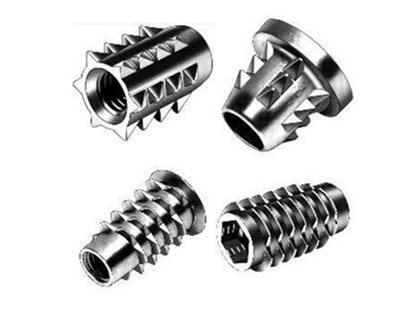
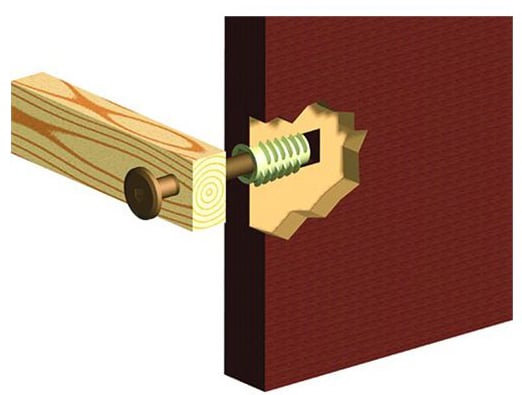
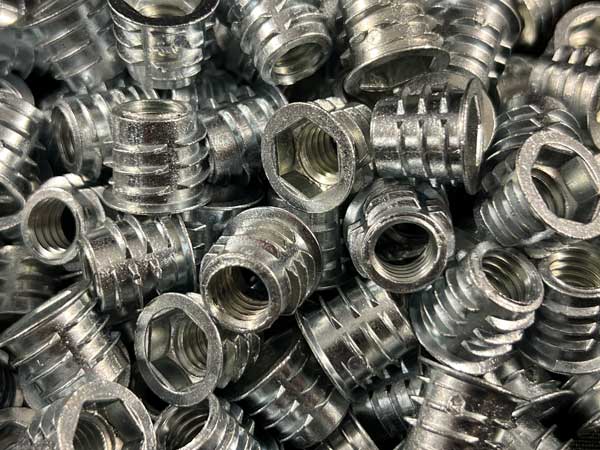
Insert nuts are threaded fasteners that are installed into a pre-drilled hole, creating a strong internal thread within softer materials such as wood and composite boards.

Insert nuts are widely used across both professional and DIY environments:

  • Furniture manufacturing and assembly
  • Kitchen and cabinet installation
  • Shopfitting and retail displays
  • Campervan and vehicle conversions
  • Repair and reinforcement of worn threads
  • General woodworking and DIY projects
View Insert Nuts

WHICH tHREADED Insert Nut do I need? 

Use our Insert Nut configurator tool below to find the perfect match for your material and project.

Find the right insert nut for wood, MDF, chipboard and plywood

Choose your material first, then select your required thread size to see the most suitable insert nuts for your application.

1 Material
2 Thread Size
This controls which insert nut types are suitable for your application.
Only thread sizes available for your selected material will appear here.
Tip: Start with the material you are fixing into. The configurator will then narrow down the available insert nuts by thread size.

Key Benefits of Insert Nuts

Strong & Durable Fixings: Insert Nuts reinforce the material, reducing the risk of stripping or wear, especially in MDF and chipboard.

Reusable Threads: Perfect for applications requiring repeated assembly, such as furniture, enclosures, or panels.

Improved Load Distribution: Spreads load more evenly compared to traditional screws, helping prevent material damage.

Suitable for Multiple Applications: Used across furniture manufacturing, retail displays, automotive interiors, and general woodworking.

insert-nuts-application-image

TYpes of Insert Nuts Available 

 We offer a variety of Insert Nut types to suit different materials and installation methods: 

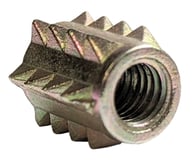
Image of Insert Nut Type A

Type A: fLUSH-fIT kNOCK-IN

  • The Build: An unheaded, barbed sleeve designed to sit perfectly flush with the wood surface.

  • Ideal for: Hardwoods and Plywood where a discreet, hidden finish is required.

  • Uses: Internal cabinet joints, shop fitting, and speaker box construction.

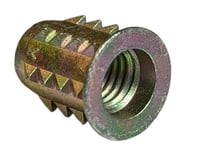
Image of Insert Nut Type B

Type B: Flanged Knock-In

  • The Build: Similar to Type A but featuring a circular flange (head) to prevent pull-through.

  • Ideal for: Softwoods and Chipboard where the material might be prone to splitting.

  • Uses: Office furniture, chairs, and flat-pack repairs.

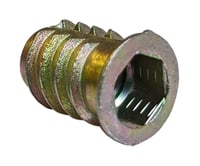
Image of Insert Nut Type D

Type D: Flanged (Screw-In)

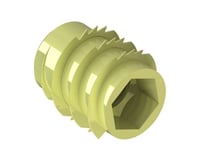
  • The Build: A heavy-duty threaded insert with a wide flange and a hex-socket for easy installation with an Allen key.

  • Ideal for: MDF and Plywood; the "bite" provides incredible resistance to vibration.

  • Uses: Heavy-duty desks, bed frames, and high-use furniture.

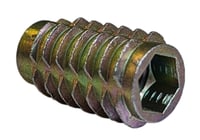
Image of Insert Nut Type E

Type E: Unheaded (Screw-In) 

  • The Build: A self-tapping, flush-fitting insert without a flange. It can be driven deep below the wood surface.

  • Ideal for: Curved surfaces or thin boards where a flange would get in the way.

  • Uses: Designer furniture, musical instruments, and intricate woodworking.

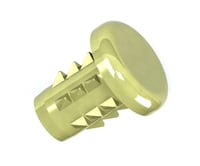
Image of Insert Nut type I

Type I:  High-Grip Capped Insert

  • The Build: Features a coarse, aggressive external tooth pattern with a closed end to protect the internal thread from debris.

  • Ideal for: Hardwoods requiring maximum pull-out resistance.

  • Uses: Children's toys, tables, and outdoor wooden structures.

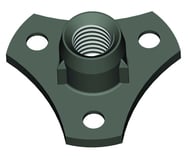
Image of Insert Nut Type J

Type J: Heavy-Duty Load Spreader 

  • The Build: Specifically engineered for weight-bearing. Includes a wide base and additional screw holes for ultimate security.

  • Ideal for: General timber applications requiring extreme structural integrity.

  • Uses: Castor wheel mounting, heavy sofa legs, and industrial workbenches.

Image of Insert Nut Type P

Type P: Serrated Self-Tapping

  • The Build: Features specialized serrated threads that reduce installation torque while increasing grip.

  • Ideal for: Composite materials and softwoods.

  • Uses: Creating permanent metal threads in soft-fiber sheet materials.


Choosing the Right Insert Nut

Selecting the correct Insert Nut depends on your application. Consider:

  • Material type (solid wood, MDF, chipboard)
  • Load requirements
  • Installation method
  • Thread size and compatibility

If you are unsure, our team is on hand to help you find the right solution for your project.

Thread Sizes Available 

Insert nuts are available in common metric internal threads including:

  • M4
  • M5
  • M6
  • M8
  • M10

The internal thread size must match your bolt or machine screw. The external design must match your board type.


WHAT ELSE DO i NEED

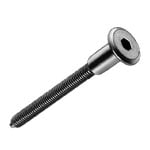
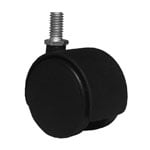
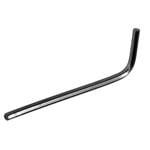
Streamline your assembly by pairing our threaded inserts with high-quality Furniture Bolts and Jointing Fasteners. For specialised applications like seating or trolleys, our Industrial Castors provide the perfect weight-bearing partner for our Type J range. Ensure you have a standard Hex Key (Allen Key) on hand for our screw-in types to achieve the necessary torque without stripping the drive.

 Use Insert Nuts when you want a clean, hidden finish or need to screw into the face of the wood. Use T-Nuts when you can access the back of the board for a permanent 'clamped' fix. 

furniture-connector-bolts-5mm-hex-drive-60mm-length

Furniture Connector Bolts

allen-keys-l-shape-63mm-length

allen keys


Committed to Industry Standards and Quality 

BFA COMMITMENT

BFA is dedicated to raising awareness of the key qualities that make British-made furniture stand out to consumers, retailers, contract specifiers, architects, and international audiences.

Membership is open to manufacturing companies across all sectors, with associate membership available for suppliers, retailers, and supporting businesses within the trade.

MEMBERS AND ITS BENEFITS

The membership of the BFA includes some of the oldest and most highly regarded furniture manufacturers in the UK. Members are from every part of the UK and from every area of manufacture including upholstery, cabinet and bed and mattresses.

British Manufacturers Association members are provided with advice and services on a range of topics including employment law, health and safety regulations, flammability law and timber regulations.

British-Furniture-Association

Frequently Asked Questions: Threaded Inserts for Wood

General & Installation

What size pilot hole do I need to drill? The required hole size depends on the "D1" (external body) diameter of the insert and the hardness of your wood.

    • For Softwoods/MDF: You typically drill a hole slightly smaller than the external thread to allow the "bite" to take hold.
    • For Hardwoods: You may need a hole closer to the external diameter to prevent the wood from splitting.
    • Pro Tip: Always check the specific Technical Data Sheet on our product pages for the exact recommended drill bit size.

Do I need special tools to install these?

    • Type A & B (Knock-in): Only a standard hammer is required.
    • Type D & E (Screw-in): These feature a hex socket, so a standard Allen key or a hex-bit on a power driver is all you need.

Can I use these in end-grain wood? Yes, but with caution. Screw-in inserts (Type D or E) are far superior for end-grain as the coarse threads provide mechanical grip where a standard wood screw would simply pull out the fibers.


Technical & Professional

What is the difference between Zinc Alloy and Stainless Steel inserts?

    • Zinc Alloy: Our most popular choice. It is cost-effective and offers excellent corrosion resistance for indoor furniture and shop fitting.
    • Stainless Steel: Recommended for outdoor applications, marine environments, or high-moisture areas (like bathrooms) to prevent rusting.

What is "Pull-Out Strength"? Pull-out strength refers to the amount of force required to strip the insert out of the material. This is determined by the density of the wood and the length of the insert. For heavy-duty load-bearing applications (like bed frames), we recommend Type D (Headed) inserts to distribute the load across the surface flange.

Are these compatible with automated assembly lines? Yes. Many of our unheaded inserts (Type A or E) are designed for bowl-feeding and automated insertion tools used in high-volume furniture manufacturing.


DIY & Troubleshooting

My insert is going in crooked. How do I fix it? If using a screw-in insert, back it out immediately. To ensure a 90-degree installation, you can thread the insert onto a long bolt, use the bolt as a "handle" to keep it straight, and drive it in. For the best results, use a drill press (turned off) to manually press/turn the insert into the wood.

Can I reuse the hole if I remove the insert? One of the main benefits of threaded inserts is that the internal thread is metal and can be used infinitely. However, if you remove the entire insert from the wood, the external hole may become slightly enlarged. If reinstalling, we recommend using a small amount of wood glue or epoxy for a permanent bond.


SPEAK TO OUR EXPERTS

To speak to one of our experts about insert nuts for your applications,  please submit the form below. Our team is always happy to help.